For much of the year a sump pump sits quietly in its pit doing nothing, which is exactly why so many fail right when they are needed. Spring snowmelt, when the ground thaws and saturates and heavy runoff finds its way toward foundations, is the season that tests every sump pump in the region, and a pump that has not run in months is the one most likely to let you down.
A little maintenance before the melt arrives is cheap insurance against a flooded basement. This guide walks through a straightforward routine you can do yourself, plus the signs that your pump is nearing the end of its life and the backup options that keep you protected during a power outage.
Why snowmelt is the real test
As snow melts and spring precipitation arrives, the ground around your foundation can become saturated. Water follows the path of least resistance, and for many homes that path leads into the drain tile system and up into the sump pit. The pump's job is to sense that rising water and move it away from the house before it floods the basement.
The trouble is timing. Snowmelt often comes with rapid temperature swings and the spring storms that cause power outages, so the pump faces its heaviest workload at exactly the moment its power supply is least reliable. That combination is why testing and backup matter so much.
A simple pre-season test
The most important maintenance step is also the easiest: confirm the pump actually turns on. Pour a bucket of water into the sump pit slowly and watch what happens. The float should rise, the pump should switch on, move the water out, and shut off cleanly once the level drops.
If the pump does not start, runs but does not move water, or fails to shut off, you have found a problem while you still have time to fix it rather than during a flood. Do this test in late winter, before the melt, and again periodically through the wet season.
- Pour water into the pit and confirm the pump activates
- Check that the float moves freely and is not obstructed
- Verify the pump shuts off after the water drains
- Listen for unusual grinding, rattling, or straining sounds
Clean the pit and check the components
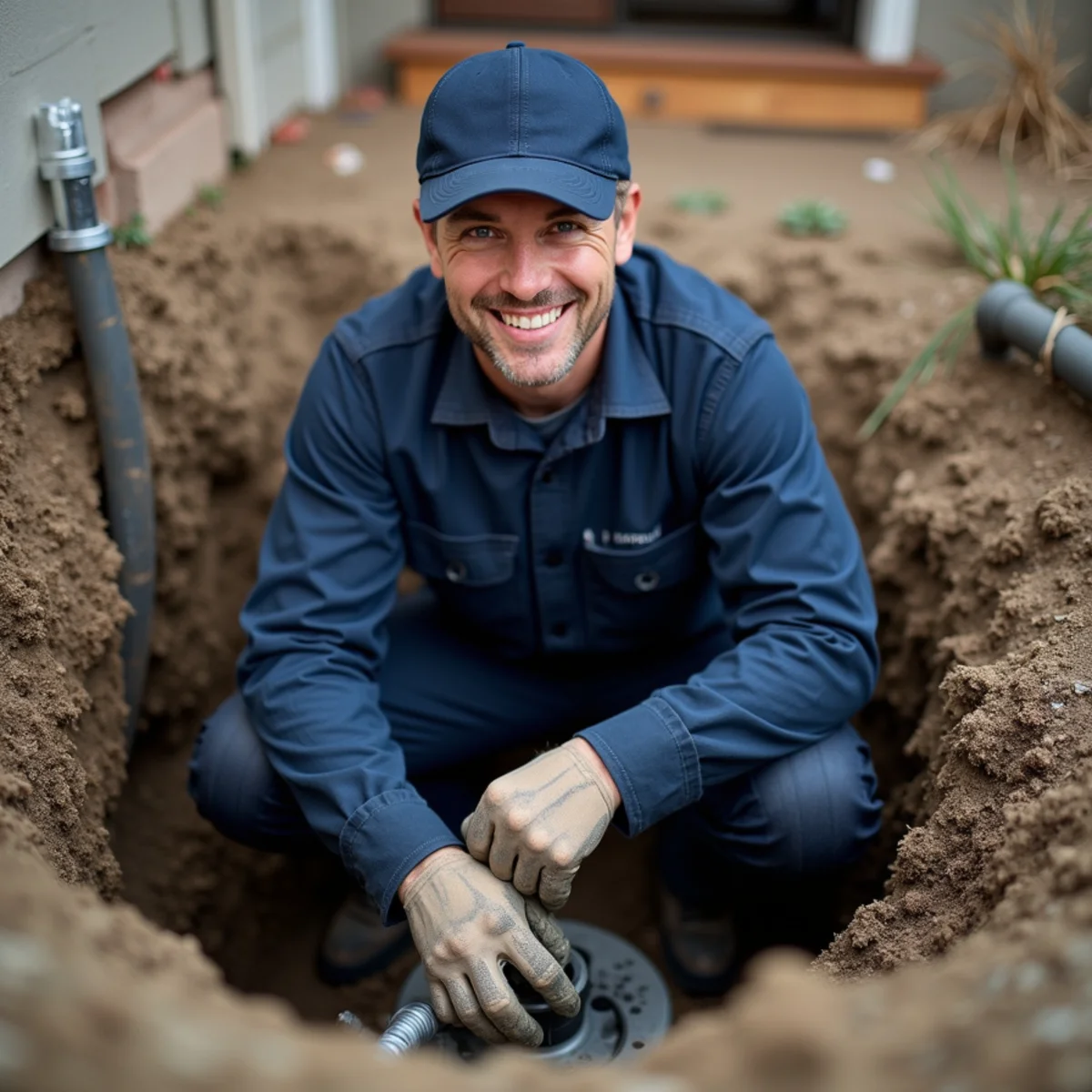
Over time debris, silt, and gravel collect in the sump pit and can clog the pump's intake or jam the float. Clearing the pit keeps the pump breathing freely. While you are down there, give the whole assembly a visual once-over for anything out of place.
Pay particular attention to the discharge line, the pipe that carries water out of the house. It needs to move water far enough away that it does not simply drain back toward the foundation, and its check valve must be working so pumped water does not flow back into the pit.
- Remove debris and sediment from the bottom of the pit
- Clear the pump intake screen of any buildup
- Confirm the check valve holds and water does not run back
- Make sure the discharge line is clear and directs water well away from the foundation
Know when your pump is wearing out
Sump pumps do not last forever. As an estimate, many units serve somewhere in the range of seven to ten years before they should be considered for replacement. If yours is in that range or older, its reliability is fading even if it still runs, and spring is a risky time to gamble on it.
Watch for the warning signs of a pump on its way out: excessive vibration or noise, frequent or irregular cycling, visible rust, or a pump that runs constantly or struggles to keep up. Replacing an aging pump proactively is far cheaper than the water damage from one that quits mid-storm.
Battery backup is not optional
Here is the hard truth about sump pumps: the storms most likely to flood your basement are also the storms most likely to knock out your power, and a pump with no electricity is just an ornament in a pit. A battery backup system keeps the pump running through an outage, which is precisely when you need it most.
A backup system includes a battery and often a secondary pump that takes over automatically when the primary loses power or cannot keep up. For a finished basement or an area prone to spring flooding, it is one of the most worthwhile upgrades you can make. Test the backup battery's charge as part of your seasonal routine so it is ready when the lights go out.
When to call for help
If your test turns up a pump that will not start, cycles erratically, or is simply past its expected life, do not wait for the melt to expose the problem. Replacing or servicing a pump on a dry day is straightforward; doing it while your basement is filling is not.
Our team services and installs sump pumps and battery backup systems throughout the area, including homes in Thornton where spring runoff and a high water table make reliable pumping especially important. A quick pre-season check now can save you a very bad day later. Reach us at (831) 290-4327 to schedule an inspection.
Keep water away from the pit in the first place
A sump pump is the last line of defense, not the first. The less water that reaches the pit, the less you are asking a mechanical device to save you during the worst storm of the year. Most of that work happens outside, where a few hours of attention in fall and spring redirect snowmelt and runoff before it ever pools against the foundation and works its way down into the drain tile that feeds the pit.
The fundamentals are unglamorous but effective. Clean gutters that dump into working downspouts, extensions that carry water well past the foundation, and soil graded to slope away from the house all cut the load on your pump dramatically. In Colorado, where a fast spring thaw can push a season of snow into the ground in a matter of days, that head start is often what keeps a basement dry when the pump would otherwise be overwhelmed.
- Keep gutters clear so downspouts actually carry water away
- Add downspout extensions that discharge several feet from the foundation
- Grade soil to slope away from the house, not toward it
- Clear snow piled against the foundation before a warm-up
- Make sure window wells drain and have covers
Choosing the right pump when it's time to replace
When a pump reaches the end of its life, the replacement is a chance to fix whatever frustrated you about the old one. The first choice is submersible versus pedestal. A submersible sits down in the pit, runs quieter, and handles more water, which suits a finished basement. A pedestal keeps its motor up above the water, costs less, and is easier to service, but it is noisier and generally less powerful when runoff peaks.
Capacity matters as much as type. A pump has to move water out faster than it enters during a hard thaw, so both horsepower and the height it must lift the water factor in; an undersized unit simply falls behind and the pit overflows. This is also the moment to add a battery backup and a working check valve if the old setup lacked them. Sizing to your actual water volume, rather than grabbing the same model off the shelf, is what buys reliability.