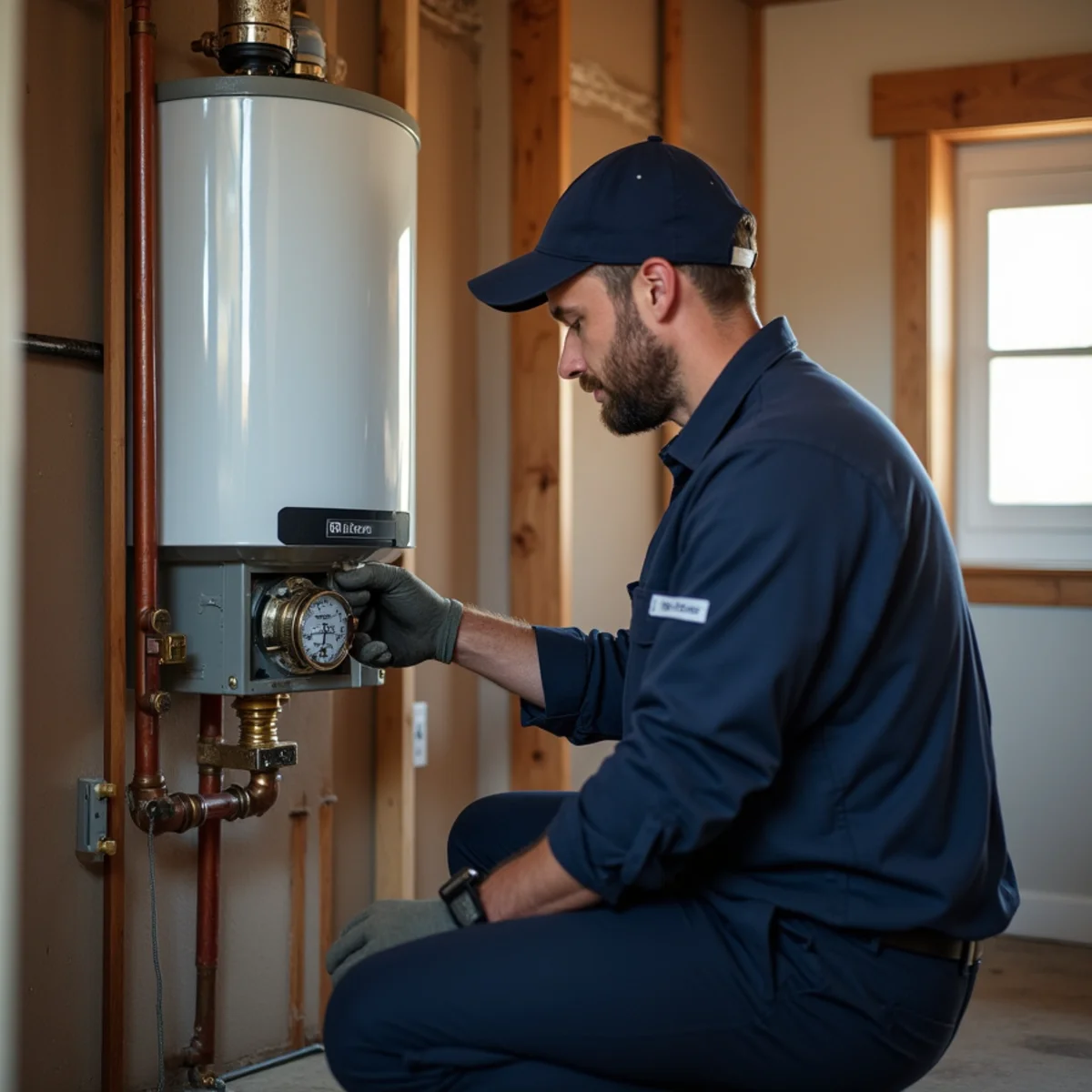
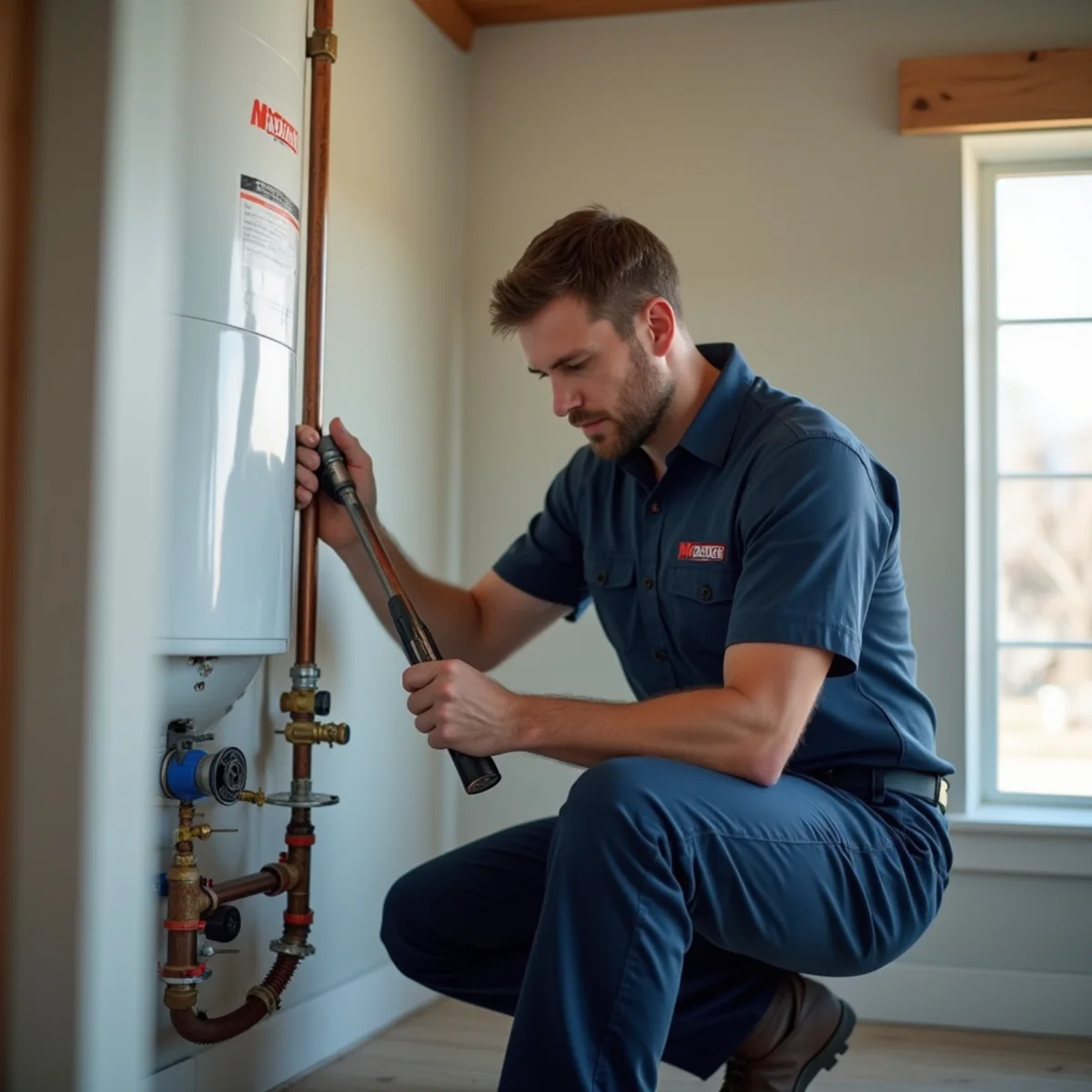
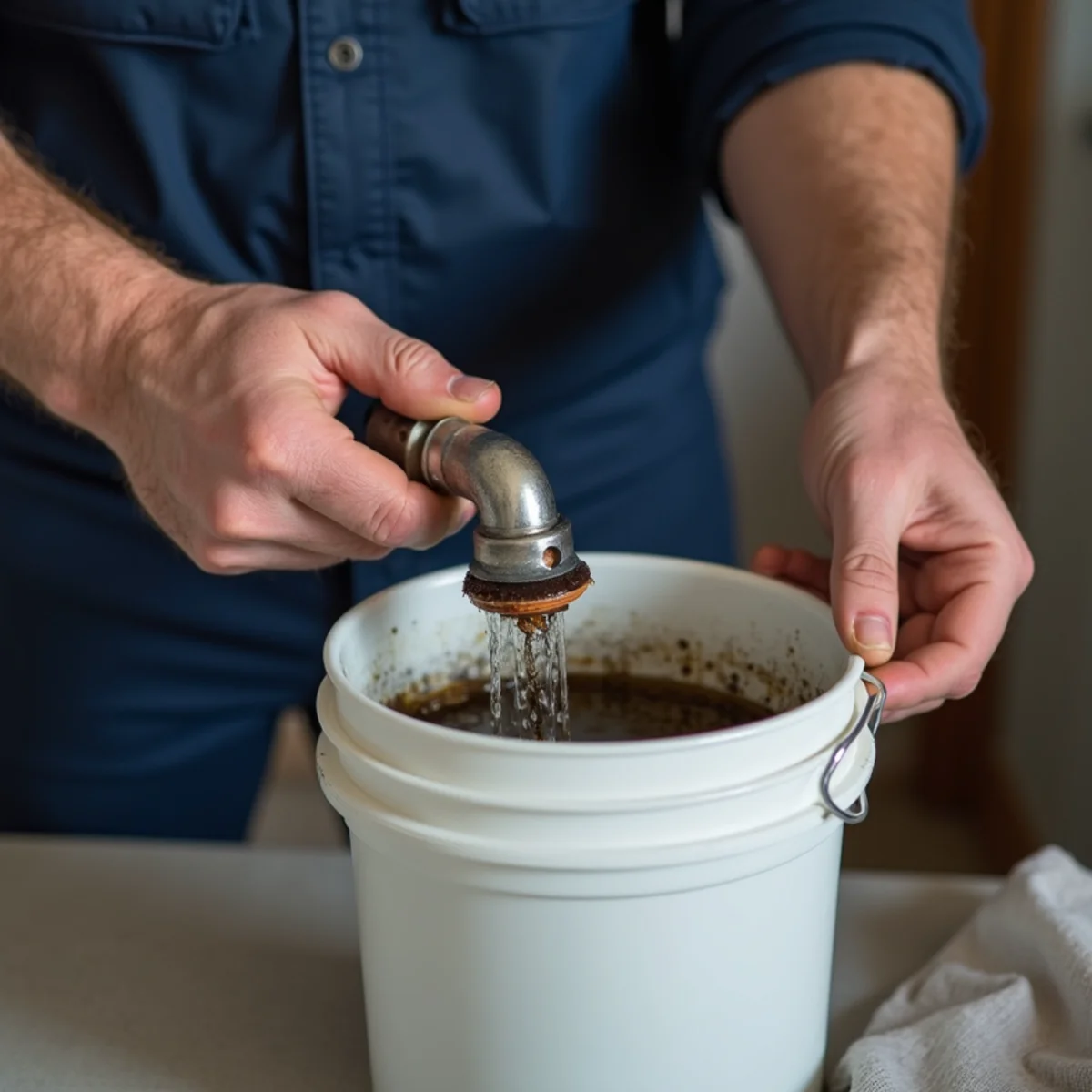
The Denver metro’s hard water is hard on water heaters. Naturally occurring minerals settle as sediment in the bottom of a tank, insulating the burner, driving up energy use, and shortening the unit’s life. We flush tanks, replace anodes, and can add treatment so your next heater lasts.
- Same-day tank and tankless replacement
- Hard-water flushing that extends heater life
- Code-compliant permits and venting
- Straight answers on repair vs. replace
Signs Your Water Heater Needs Attention
- No hot water or water that never gets hot enough
- Rusty, cloudy or metallic-smelling hot water
- Popping, rumbling or crackling from sediment buildup
- Water pooling around the base of the tank
- Hot water that runs out far faster than it used to
- A pilot light or burner that will not stay lit
Ready to book water heaters?
Same-day service — 60–90 minutes across Littleton & Arapahoe County.
Tank vs. Tankless: Which Is Right for Your Home?
A conventional tank heater is affordable up front and simple to service. A tankless (on-demand) unit heats water only as you use it, saves space, and can lower standby energy loss — but sizing, gas supply, and venting have to be right for it to deliver. We walk you through capacity, fuel type, and budget so the choice fits your household, not a sales quota.
For families that run out of hot water, we look at first-hour rating and recovery, not just tank size. For tankless conversions, we confirm gas line capacity and venting before we quote — no surprises mid-job.
Repair, Replace, and Maintenance Done Right
Many no-hot-water calls come down to a thermostat, heating element, thermocouple, or gas valve we can replace the same day. When a tank is leaking from the body or badly corroded, replacement is the honest answer, and we install a properly sized unit with new fittings, an expansion tank where required, and code-compliant venting.
Annual maintenance — flushing sediment, checking the anode rod, and testing the temperature-and-pressure relief valve — is the single best way to protect a heater in hard-water country. Ask us to add it when we visit.
If Your Water Heater Is Leaking, Do This First
A tank holds 40 or more gallons, so a leaking water heater can flood a basement or utility closet quickly. Take a few steps before we arrive to limit the damage — and if water spread beyond the heater, photograph it before cleanup and ask your insurer what documentation they need. We will not promise a coverage outcome, but we will give you the records to support a claim.
- Turn the cold-water supply valve at the top of the heater clockwise to shut it off
- For a gas unit, set the gas control to "off"; for an electric unit, switch off its breaker
- Do not relight a gas heater that has sat in water — have it inspected first
- Move stored items off the floor and photograph the leak and any damage
- Call (831) 290-4327 — a leaking tank rarely reseals and usually needs replacement
Choosing the Right Size and Type for Your Home
The right water heater is not just about gallons. We size to your household’s peak demand — how much hot water you use at once for back-to-back showers, laundry and the dishwasher — using first-hour rating and recovery, not tank size alone. An undersized unit runs out; an oversized one wastes energy.
We also match the fuel and format to your home: a standard gas or electric tank, a space-saving tankless unit (which needs the right gas line and venting), or a high-efficiency heat-pump model. In our hard-water area, we talk through anode choice and whether adding treatment will protect your investment before you buy.
- Household size and peak simultaneous hot-water demand
- First-hour rating and recovery rate — not just gallon capacity
- Fuel type: gas, electric or heat-pump, plus available gas and venting
- Space and whether a tankless conversion fits your setup
- Hard-water protection: anode selection and optional treatment
Why Littleton Homeowners Choose Us for Water Heaters
A water heater is a permit-and-code job, not a box-store swap. We have spent 15 years replacing tanks and tankless units in Denver-metro homes where hard water quietly shortens their life, so we size the unit to your real demand, set the expansion tank and venting to code, and pull the permit — the details that keep the install safe and the warranty valid.
When you call us you reach a licensed, insured Colorado plumber who quotes the job up front, stocks common tank sizes for same-day replacement, and hauls the old unit away. We back the workmanship, and we will tell you honestly when a $200 part will restore a sound tank instead of selling you a new one — the straight talk that has earned us 480+ local customers.
- 15+ years installing tank, tankless and heat-pump water heaters
- Licensed & insured; permitted and code-compliant every time
- Same-day replacement from stocked common sizes, old unit hauled away
- Honest repair-vs-replace advice — no upsell on a sound tank
- 480+ satisfied Denver-metro customers and a workmanship warranty
What Affects Water Heater Pricing
- Tank vs. tankless and the unit’s capacity
- Gas, electric or heat-pump fuel type
- Venting, expansion tank and code upgrades at replacement
- Permit requirements and haul-away of the old unit
- Whether a repair (element, valve, thermostat) will safely restore service
Water Heaters Across the Littleton Area
We provide water heater installation & repair throughout Littleton, Arapahoe County and the surrounding Denver metro, including: