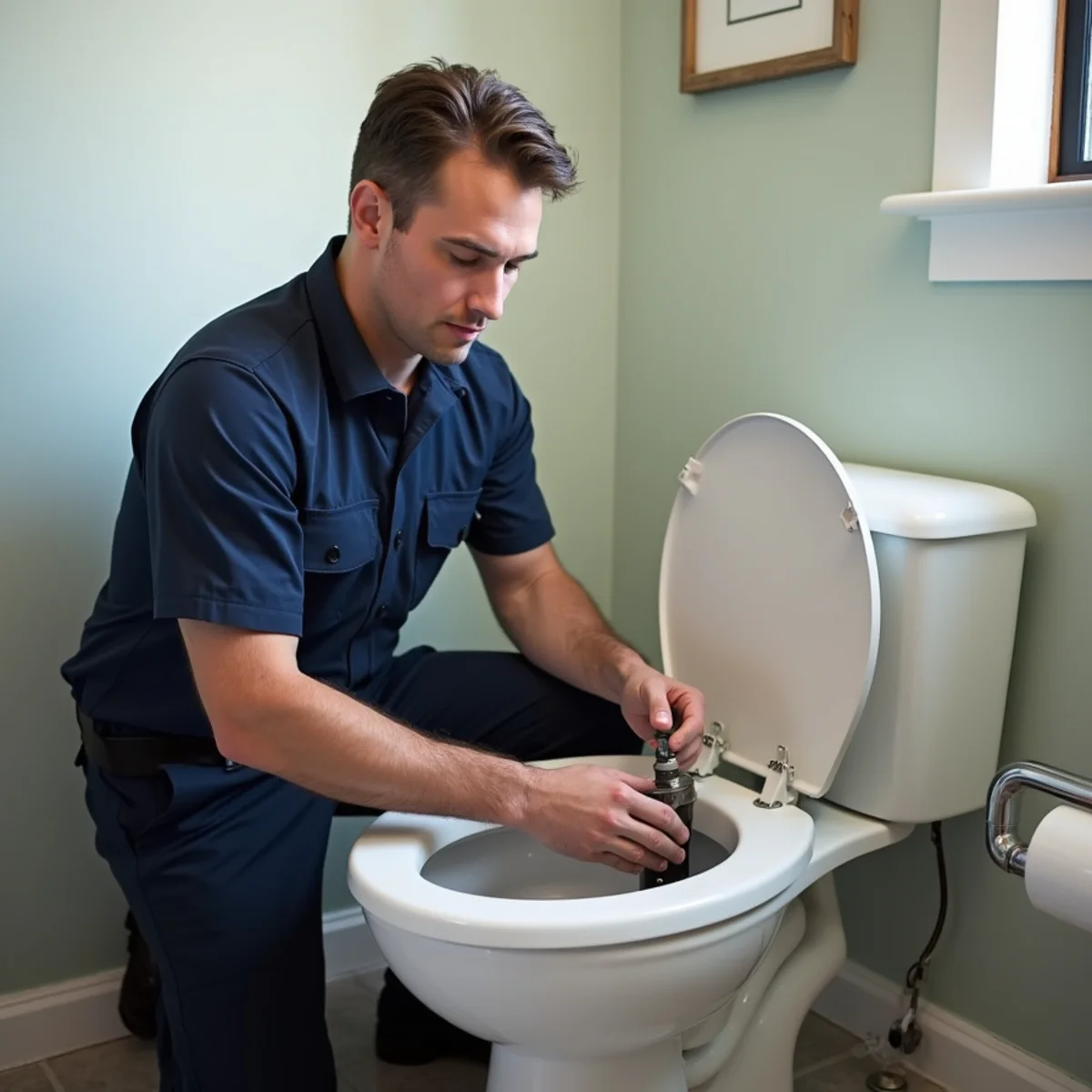
A toilet that never quite stops running is more than an annoying background noise. It can quietly waste hundreds of gallons of water and inflate your bill, all from a part that often costs just a few dollars to replace.
The reassuring news is that most running toilets come down to one of a handful of causes inside the tank, and many are fixable in minutes. Here is how to find the culprit and decide whether to fix it yourself or call a pro.
How a toilet is supposed to work
Understanding the normal cycle makes troubleshooting easy. When you flush, the flapper at the bottom of the tank lifts, releasing water into the bowl. As the tank empties, the flapper drops and seals, and the fill valve refills the tank until the float rises enough to shut it off.
A running toilet means one part of that cycle is not completing. Either water is escaping the tank so it never stops refilling, or the fill valve is not shutting off. Lift the tank lid and watch a cycle to see where it breaks down.
The flapper is the usual suspect
The most common cause of a running toilet is a worn or misaligned flapper. Over time the rubber degrades, warps, or collects mineral deposits, so it no longer seals tightly, letting water leak into the bowl continuously.
To test it, add a few drops of food coloring to the tank and wait 15 minutes without flushing. If color appears in the bowl, the flapper is leaking. Replacing it is inexpensive and usually takes only a few minutes with the water shut off.
Check the flapper chain
Sometimes the flapper is fine but the chain that lifts it is the problem. If the chain is too short or tangled, it can hold the flapper slightly open. If it is too long, it can slip under the flapper and break the seal.
Adjust the chain so there is just a little slack when the flapper is closed. This five-second fix resolves a surprising number of running toilets, so check it before replacing parts.
The float and fill valve
If the water level rises too high, it spills into the overflow tube and the fill valve keeps running to replace it. The fix is to lower the float so the water stops below the top of the overflow tube, usually about an inch down.
On older toilets the float is a ball on an arm you can gently bend down; on newer ones it is a cup you adjust with a screw or clip. If adjusting the float does not help, the fill valve itself may be worn and need replacing.
The overflow tube and other causes
If the overflow tube is cracked or the wrong height, water can drain into it constantly. A tube that sits too low relative to the fill level will never let the tank stop running, and replacement is the fix.
Less common causes include a faulty flush valve seat that the flapper cannot seal against, or heavy mineral scale from hard water fouling the components. Along the Front Range, hard-water buildup is a frequent contributor to worn tank parts.
- Cracked or misaligned overflow tube.
- Corroded or pitted flush valve seat.
- Mineral scale preventing a clean seal.
- A fill valve that has simply worn out.
Why fixing it quickly matters
A running toilet can waste a lot of water. Even a slow leak adds up over a month, and a badly stuck flapper can waste hundreds of gallons a day. Since toilets already account for roughly 30 percent of indoor water use, a running one hits your bill hard.
Fixing it promptly is one of the easiest ways to cut water waste at home. If your toilet is old and repairs keep piling up, upgrading to an efficient WaterSense model that uses 1.28 gallons per flush may be the smarter long-term move.
When a Running Toilet Needs a Plumber
If you have replaced the flapper, adjusted the float and chain, and the toilet still runs, the issue may be a warped flush valve, hidden crack, or a fill valve problem that is worth a professional's eye. Repeated failures on an aging toilet may signal it is time for replacement.
For homeowners in Littleton and nearby Columbine, our toilet installation and repair service diagnoses and fixes running toilets quickly. Call Littleton Plumbing Pros at (831) 290-4327 and stop watching your water bill climb.
Replacing a flapper step by step
A flapper swap is one of the most satisfying small repairs a homeowner can do, and it usually costs only a few dollars. Start by shutting the water off at the valve behind the toilet and flushing to empty the tank. Unhook the old flapper from the flush valve ears and the chain from the flush lever, then take it with you to the store so you match the size and style exactly.
Universal flappers do not fit every toilet, so a matched replacement seals better and lasts longer. Clip the new one onto the ears, connect the chain with just a little slack, then turn the water back on and let the tank refill. Do a dye test afterward to confirm the leak is gone. If it still seeps, the flush valve seat itself may be the problem.
- Shut off the supply valve and flush to empty the tank.
- Unhook the old flapper and take it in to match size and style.
- Clip on the new flapper and set the chain with slight slack.
- Refill the tank and run a food-coloring dye test.
- If it still leaks, suspect the flush valve seat, not the flapper.
Keeping tank parts working in hard water
Denver-metro water is hard, and the minerals it carries are quietly rough on the small parts inside your tank. Scale collects on the flapper and the flush valve seat, roughening the surfaces that need to seal cleanly, and it stiffens the rubber until it no longer seats flat. That is why toilets in this area tend to develop running problems sooner than the parts alone would suggest.
A little maintenance goes a long way. Once or twice a year, shut the water off, drain the tank, and wipe the flush valve seat and flapper clean of chalky buildup; a cloth and mild vinegar handle most of it. If deposits keep returning quickly, that is a sign of heavier hard water, and whole-home treatment protects far more than the toilet.